Iran is not a threat to the U.S. or their neighbors.
Now Seymour Hersh has inside information to confirm this. Of course, Hersh provides consistent and usually accurate reporting on national security. His latest, Iran and the Bomb , is a good read, though with his characteristic unattributable sourcing. (You can also watch him on Democracy Now!) The important point to remember is that without Hersh's unnamed sources, the public record is rich in the fact that Iran is not building a nuclear weapons program.
Friday, June 3, 2011

Wednesday, May 18, 2011
[Short entry] Fukushima 'extensive meltdown' confirmed
The extent of the catastrophe at Fukushima Dai'ichi is only now being realized in mainstream press outlets and US academic institutions. The NY Times, for example, and the American Academy for Arts and Sciences are reporting that indicates a revision from previous characterizations of the nuclear tragedy in Fukushima prefecture. Earlier news reports, with few exceptions, characterized the state of the reactors at the Tokyo Power Company's Fukushima site as "partial meltdowns." (See the 29 March 2011 entry in this weblog.) Claims of a "partial meltdown" were suspect with the reports of plutonium contamination in the soil and water outside the reactor containment vessels.
The concept of a "partial meltdown" is, at best, an imprecise state; at worst, it's a newspeak/PR term to titrate the reaction of the public to radiation and radioactive material releases into the environment. Conventionally, a "meltdown" occurs when a reactor core gets hot enough to alter the fuel rod configurations beyond design tolerance. This increases the likelihood of radiation and/or radioactive material into the environment. Putting the word "partial" in front of "meltdown," especially before the configuration of the Fukushima reactors could be confirmed visually or otherwise was a reaction based on mitigating public perception, rather than providing the public with information.
Major, mainstream media outlets, such as the NY Times, would have been doing their job properly by informing their readers of these motivations.
The concept of a "partial meltdown" is, at best, an imprecise state; at worst, it's a newspeak/PR term to titrate the reaction of the public to radiation and radioactive material releases into the environment. Conventionally, a "meltdown" occurs when a reactor core gets hot enough to alter the fuel rod configurations beyond design tolerance. This increases the likelihood of radiation and/or radioactive material into the environment. Putting the word "partial" in front of "meltdown," especially before the configuration of the Fukushima reactors could be confirmed visually or otherwise was a reaction based on mitigating public perception, rather than providing the public with information.
Major, mainstream media outlets, such as the NY Times, would have been doing their job properly by informing their readers of these motivations.
Tuesday, April 19, 2011
Radiation: levels, exposure, dosage
The continuous coverage of the ongoing nuclear catastrophe centered in the Fukushima prefecture of the Japanese island of Honshu often includes a lot of information related to radiation levels and their effects on human health. The purpose of this entry is to cover the basic physics of the radiation's affect on living tissues. We won't have the occasion here to cover in any detail how exposure to radiation is related to increased incidence of cancer. Hopefully, we'll get to that soon, in a later entry.
Let's begin first with what radiation is, physically speaking. Radiation is a collection (perhaps a collection of just one) of subatomic particles. 'Subatomic' means things smaller than the atom. Recall that (a cartoon of) the atom looks like a solar system, with the nucleus at the center, like the sun, and electrons going around the center, like the planets. Also recall that while the structure is similar to the solar system, the analogy ends there. The forces and speeds acting in the atom are much larger than those in the solar system.
Now, when we're discussing radiation, we're often talking about the things that make up the atom -- electrons and nuclei -- so they have to be smaller than the atom itself. This is the origin of the term, "subatomic," which means "below the atomic scale." And the atomic scale is about 100 million times smaller than the diameter of a an American penny, which is much too small to see with visible light from, say, a flashlight or even in full sunlight. Radiation can not be seen by human eyes because the particles are so small. Visible light is of too large a wavelength to resolve these subatomic particles. Incidentally, the overwhelmingly vast majority of radiation doesn't glow either. You can't see it, taste it, smell it, hear it, or feel it -- unless you suffer a huge dose, that is. But we'll return to this.
Now that we understand the length scale -- subatomic -- that we're discussing, we forget about the atom as a whole and we just consider its parts. Because it is these parts of the atom, the electrons and the nucleus (made of protons and neutrons) and some other types of subatomic particles not found in the atom, that can be flying through space at tremendous speeds, which damage the cells of living (and dead, incidentally) tissue. This damage is the exactly the damage that radiation causes. And this radiation damage can lead to severe sickness and death and to higher incidence of cancer and other diseases.
Let's talk in a little more detail about the microscopic physical process that corresponds to radiation damage. Suppose that we could follow a single neutron flying through space. Typical speeds are tens-of-thousands to millions of miles-per-hour. And suppose that we can see this neutron hitting a collection of tissue, like muscle tissue in a person's arm or bone marrow. Then what we would most often "see" (we're imagining all of this because you can't see things this small with visible light) as the neutron impinged upon the surface of the tissue, which is made of closely-packed cells touching each other, is that it would pass undisturbed through the cell membrane, the outermost portion of the cell, through the inner parts of the cell -- the cytoplasm, organelles, and other cellular features, like the nucleus -- and right out the other side. Since we're looking at a single neutron this is a common scenario. In this scenario, there would be no damage to the cell.
But suppose conversely that the alignment of the flight path of the neutron were just right and it strikes one of the nuclei of one of the atoms in one of the many molecules making up some part of the cell. In that case, the neutron would essentially blast apart the nucleus in the atom of the nucleus in the cell that it hit. This is (neutron) radiation damage. And this is what can be so devastating to living tissue at the cellular level when it happens frequently.
Taken one at a time like we're considering here, the neutron hitting the matter that makes up the cell tissue isn't going to do any significant damage (statistically speaking, at least) to that tissue. But suppose instead of a single neutron flying into the cell and blasting its tissue apart at the subatomic level we have a hundred neutrons in a dense packet that flies into the cell. Then we've just raised the odds (or probability) that some damage can be done. Damaging levels of neutron radiation correspond to several hundreds of neutrons per second falling on an area about the size of an American penny. With this high number of neutrons bombarding the matter that makes up the cellular tissues, the damage can be catastrophic for the cell and it may stop functioning. Or it may, at lower levels of prolonged radiation, suffer a transformation to a cancerous cell.
The above understanding of the microscopic characterization of the physical process of radiation damage allows us to understand the issues of radiation levels, exposure, and dosage.
The radiation level is how many subatomic particles are flying around in some region of space. In order to specify the radiation level we have to say how many particles there are in some given amount of time and how densely they present themselves in space.
The next two terms can be a little confusing because they're often conflated in the media -- radiation exposure and dosage.
The radiation exposure is how much radiation at a given level was applied externally to a given sample of tissue. The radiation dosage is how much radiation is absorbed the exposed tissue. It's the dosage that is a measure of the potential damage that high radiation levels can 'achieve' because this means that the neutron (or other subatomic particle) hit something in a cell. But recall from our discussion of what happens when a single neutron approaches a cell. It might just pass right through. So this particular "exposure" to the neutron radiation didn't result in a "dose" of neutron radiation.
Calculating dosage is a pretty tricky affair. That's because we first need to know the radiation level and the exposure in order to determine the dosage. And the dosage also depends on the type of radiation (neutron or alpha-, beta-, or gamma-radiation, for example) and the type of tissue that received the dose.
These topics will be the subject of subsequent entries.
Thanks for reading. --Mark
Let's begin first with what radiation is, physically speaking. Radiation is a collection (perhaps a collection of just one) of subatomic particles. 'Subatomic' means things smaller than the atom. Recall that (a cartoon of) the atom looks like a solar system, with the nucleus at the center, like the sun, and electrons going around the center, like the planets. Also recall that while the structure is similar to the solar system, the analogy ends there. The forces and speeds acting in the atom are much larger than those in the solar system.
Now, when we're discussing radiation, we're often talking about the things that make up the atom -- electrons and nuclei -- so they have to be smaller than the atom itself. This is the origin of the term, "subatomic," which means "below the atomic scale." And the atomic scale is about 100 million times smaller than the diameter of a an American penny, which is much too small to see with visible light from, say, a flashlight or even in full sunlight. Radiation can not be seen by human eyes because the particles are so small. Visible light is of too large a wavelength to resolve these subatomic particles. Incidentally, the overwhelmingly vast majority of radiation doesn't glow either. You can't see it, taste it, smell it, hear it, or feel it -- unless you suffer a huge dose, that is. But we'll return to this.
Now that we understand the length scale -- subatomic -- that we're discussing, we forget about the atom as a whole and we just consider its parts. Because it is these parts of the atom, the electrons and the nucleus (made of protons and neutrons) and some other types of subatomic particles not found in the atom, that can be flying through space at tremendous speeds, which damage the cells of living (and dead, incidentally) tissue. This damage is the exactly the damage that radiation causes. And this radiation damage can lead to severe sickness and death and to higher incidence of cancer and other diseases.
Let's talk in a little more detail about the microscopic physical process that corresponds to radiation damage. Suppose that we could follow a single neutron flying through space. Typical speeds are tens-of-thousands to millions of miles-per-hour. And suppose that we can see this neutron hitting a collection of tissue, like muscle tissue in a person's arm or bone marrow. Then what we would most often "see" (we're imagining all of this because you can't see things this small with visible light) as the neutron impinged upon the surface of the tissue, which is made of closely-packed cells touching each other, is that it would pass undisturbed through the cell membrane, the outermost portion of the cell, through the inner parts of the cell -- the cytoplasm, organelles, and other cellular features, like the nucleus -- and right out the other side. Since we're looking at a single neutron this is a common scenario. In this scenario, there would be no damage to the cell.
But suppose conversely that the alignment of the flight path of the neutron were just right and it strikes one of the nuclei of one of the atoms in one of the many molecules making up some part of the cell. In that case, the neutron would essentially blast apart the nucleus in the atom of the nucleus in the cell that it hit. This is (neutron) radiation damage. And this is what can be so devastating to living tissue at the cellular level when it happens frequently.
Taken one at a time like we're considering here, the neutron hitting the matter that makes up the cell tissue isn't going to do any significant damage (statistically speaking, at least) to that tissue. But suppose instead of a single neutron flying into the cell and blasting its tissue apart at the subatomic level we have a hundred neutrons in a dense packet that flies into the cell. Then we've just raised the odds (or probability) that some damage can be done. Damaging levels of neutron radiation correspond to several hundreds of neutrons per second falling on an area about the size of an American penny. With this high number of neutrons bombarding the matter that makes up the cellular tissues, the damage can be catastrophic for the cell and it may stop functioning. Or it may, at lower levels of prolonged radiation, suffer a transformation to a cancerous cell.
The above understanding of the microscopic characterization of the physical process of radiation damage allows us to understand the issues of radiation levels, exposure, and dosage.
The radiation level is how many subatomic particles are flying around in some region of space. In order to specify the radiation level we have to say how many particles there are in some given amount of time and how densely they present themselves in space.
The next two terms can be a little confusing because they're often conflated in the media -- radiation exposure and dosage.
The radiation exposure is how much radiation at a given level was applied externally to a given sample of tissue. The radiation dosage is how much radiation is absorbed the exposed tissue. It's the dosage that is a measure of the potential damage that high radiation levels can 'achieve' because this means that the neutron (or other subatomic particle) hit something in a cell. But recall from our discussion of what happens when a single neutron approaches a cell. It might just pass right through. So this particular "exposure" to the neutron radiation didn't result in a "dose" of neutron radiation.
Calculating dosage is a pretty tricky affair. That's because we first need to know the radiation level and the exposure in order to determine the dosage. And the dosage also depends on the type of radiation (neutron or alpha-, beta-, or gamma-radiation, for example) and the type of tissue that received the dose.
These topics will be the subject of subsequent entries.
Thanks for reading. --Mark
Tuesday, March 29, 2011
[ALERT] Meltdown confirmed
What the New York Times calls "at least a partial meltdown" has occurred at the Fukushima I nuclear power plant's reactor 3. The fact that plutonium has been found in the soil outside this reactor is conclusive evidence that the steel core containment vessel has been breached. The cause of this compromise of the containment vessel and building is the consequence of excessive heat generated by the ongoing nuclear reactions inside the core -- in short, a "meltdown" has occurred.
This is a catastrophe of this highest order -- it really doesn't get much worse than this in the nuclear industry. And the area will be unaccessible and uninhabitable for many decades.
More reporting from ABC.
This is a catastrophe of this highest order -- it really doesn't get much worse than this in the nuclear industry. And the area will be unaccessible and uninhabitable for many decades.
More reporting from ABC.
Wednesday, March 16, 2011
[ALERT] Nuclear Event Scale goes to 6 out of 7
• Fears of a catastrophe at the Fukushima nuclear power plant in Japan escalated following a third explosion and a fire in another reactor that caused radiation to rise to harmful levels.
France's ASN nuclear safety authority says the nuclear accident at the Fukushima Daiichi plant could now be classed as level six out of the International Nuclear Event Scale of one to seven.
Guardian link
France's ASN nuclear safety authority says the nuclear accident at the Fukushima Daiichi plant could now be classed as level six out of the International Nuclear Event Scale of one to seven.
Guardian link
Tuesday, March 15, 2011
[ALERT] US expert: Breach possible at Japan nuclear plant
Associated Press
US expert: Breach possible at Japan nuclear plant
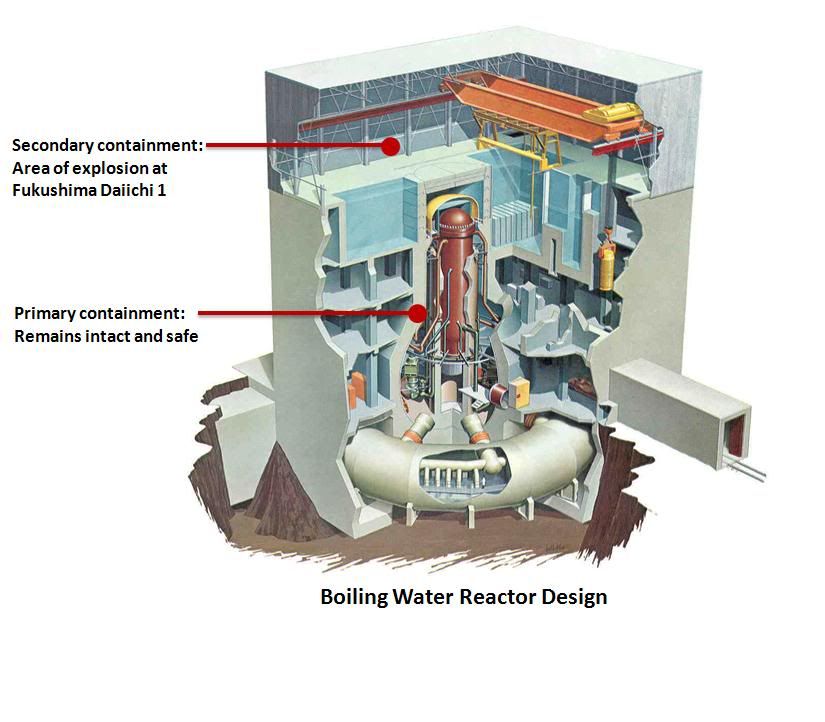
Associated Press, 03.15.11, 11:17 AM EDTWASHINGTON -- A U.S. nuclear industry official says there is evidence that the primary containment structure at one of the stricken Japanese reactors has been breached, raising the risk of further release of radioactive material.
Anthony Pietrangelo of the Nuclear Energy Institute said Tuesday that falling pressure inside the suppression pool at the No. 2 reactor at Fukushima Dai-ichi and reports of rising radiation levels there raise the possibility that the reactor's containment has been breached. He said the breach of the primary containment structure could lead to the release of more radioactive materials.
Pietrangelo, chief nuclear officer of the institute, also praised Japanese authorities, saying that they were doing a "heroic" job of dealing with the damage to several nuclear plants in the wake of last week's earthquake and tsunami.
Copyright 2011 The Associated Press. All rights reserved. This material may not be published, broadcast, rewritten or redistributed.
[ALERT] Core meltdown at Fukushima Dai'ichi highly likely
There is some good reporting on the state of the containment efforts at the out-of-control nuclear fission reaction housed in the Fukushima I Nuclear Power Plant. The New York Times has a lengthy article. There is an excellent description, of a moderately technical nature, on the Beyond Nuclear website. And a lot more that you can find among the noise.
There is a little gold-mine of an interview of a nuclear engineer (done by his daughter). [Video/audio/transcript available.]
The short version is this: a skeleton staff of personnel of about 60 people at the Fukushima I Nuclear Power Plant stands a very low probability of averting a meltdown. From the Times article:
There is a little gold-mine of an interview of a nuclear engineer (done by his daughter). [Video/audio/transcript available.]
The short version is this: a skeleton staff of personnel of about 60 people at the Fukushima I Nuclear Power Plant stands a very low probability of averting a meltdown. From the Times article:
“We are on the brink,” said Hiroaki Koide, a senior reactor engineering specialist at the Research Reactor Institute of Kyoto University. “We are now facing the worst-case scenario. We can assume that the containment vessel at Reactor No. 2 is already breached. If there is heavy melting inside the reactor, large amounts of radiation will most definitely be released.”
Subscribe to:
Posts (Atom)